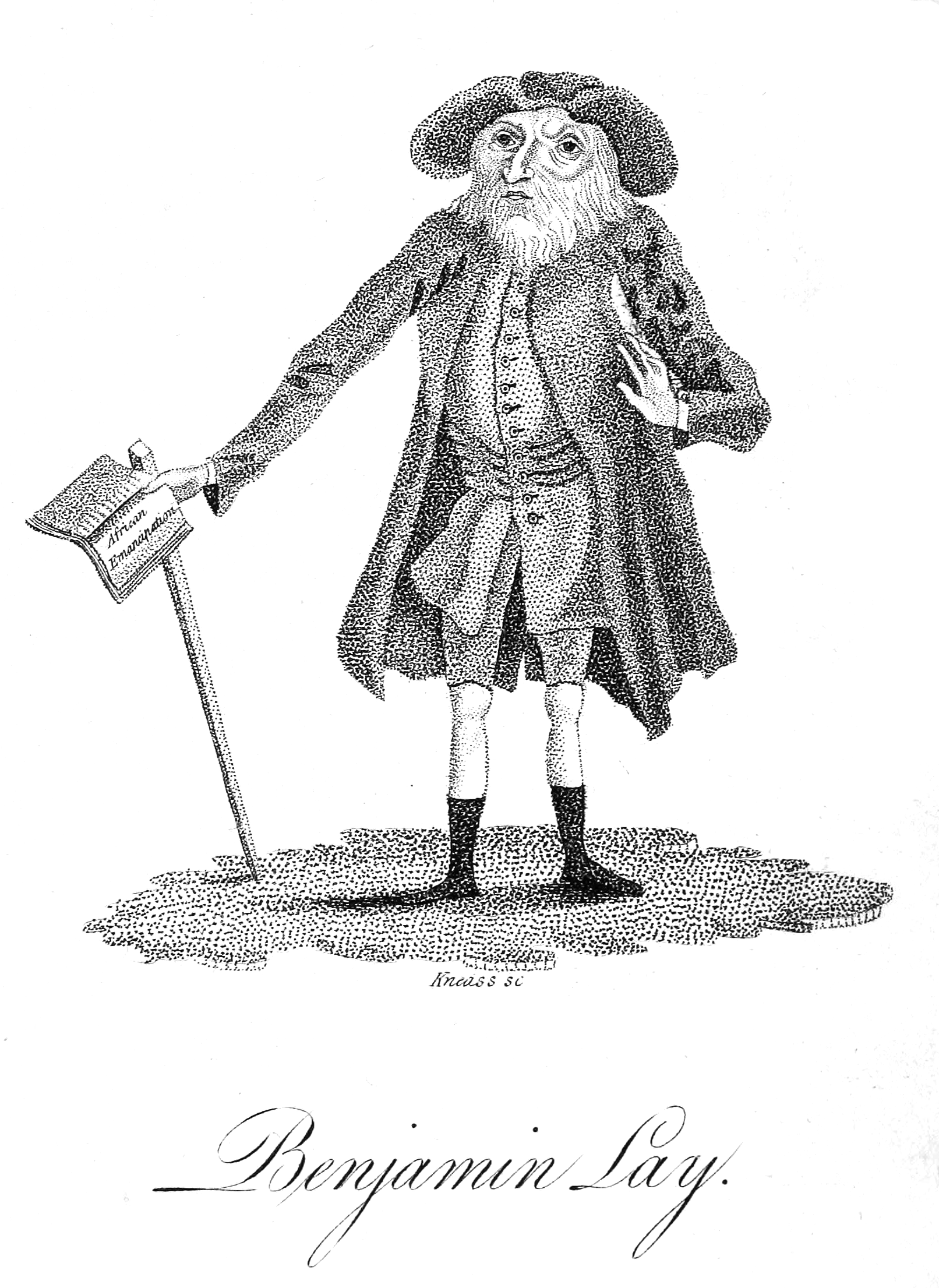
Benjamin Lay was a radical Quaker abolitionist (and dwarf) and one of the first people to demand the immediate and complete emancipation of enslaved people worldwide. Born in Copford England in 1682, he worked as a shepherd, a glover, a “poor common sailor” for twelve years, a shopkeeper, and a bookseller. He lived and worked for two years in Barbados, the world’s leading slave society, where he saw the horrors of slavery up close and became an ardent abolitionist two full generations before an anti-slavery movement emerged. He moved to Philadelphia in 1732 and discovered that many of his fellow Quakers were enslavers. Benjamin challenged them in dramatic public ways by, for example, spattering fake blood on their heads during a Quaker meeting or smashing tea cups in a public Philadelphia market to protest against the exploitation of tea and sugar workers in India and the Caribbean. Sugar was made with blood, he explained. He lived in a cave, produced his own food and clothes, and boycotted all goods made with slave labor. He was also a vegetarian, an opponent of class privilege, a feminist, and a champion of animal rights. Through his guerrilla theatre and his book, All Slave-Keepers that Keep the Innocent in Bondage, Apostates (1738), he played a key role in persuading his co-religionists to become the first group to ban slavery in its own ranks. He passed away in 1759 at the age of 77.
Until recently, Benjamin Lay was almost completely unknown among historians and the general public. He was too radical, too confrontational, too far ahead of his time. He came from the wrong class and he had the wrong kind of body. He did not fit the story told by historians that abolitionism was the work of middle- and upper-class “enlightened” gentlemen, hence he was forgotten or, shall we say, actively buried. This film is part of his rediscovery.
He lived in a cave, produced his own food and clothes, and boycotted all goods made with slave labor. He was also a vegetarian, an opponent of class privilege, a feminist, and a champion of animal rights.